Losing extra weight
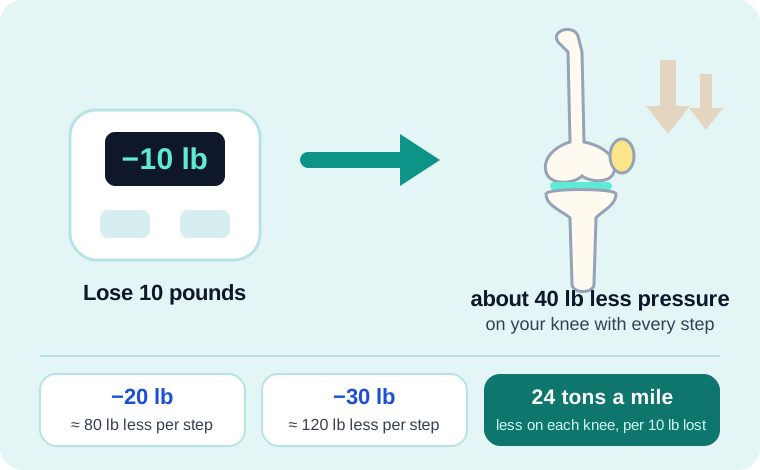
Extra weight puts more load on a hip or knee, before and after surgery. Studies of people with knee arthritis found that each pound lost takes about four pounds of pressure off the knee with every step. Many people find their pain improves noticeably, and some can put surgery off.
Weight also affects safety. People with a very high body mass index (BMI over about 40) have higher rates of wound problems, infection, blood clots and implant problems, so many surgeons ask patients to lose weight before scheduling a joint replacement. Even a modest loss can help.
The best approach is one you can keep up: smaller portions, fewer sugary drinks and snacks, more vegetables and protein, and activity your joints can handle, such as swimming, water exercise or a stationary bike. A dietitian or a doctor-supervised weight program can help.
Videos
The Fasting Mimicking Diet
The Fasting Mimicking Diet was developed by Dr. Valter Longo, who directs the Longevity Institute at the University of Southern California (USC). For 5 days in a row, once a month, you eat a set, low-calorie, mostly plant-based menu; the rest of the month you eat normally. It's sold as a kit called ProLon, and many other programs now copy the idea.
Studies by Dr. Longo's group and others have found weight loss and improvements in some health markers such as waist size and blood pressure. It has not been tested specifically as preparation for joint surgery. Dr. Longo has a financial interest in the company that sells ProLon.
Before you try it: Only try it with your doctor's OK, especially if you have diabetes, take blood pressure or diabetes medicines, are underweight or have had an eating disorder. Don't do it in the weeks just before surgery: your body needs enough calories and protein to heal.
Videos
Fasting and type 2 diabetes
Fasting approaches are also being studied for type 2 diabetes, which matters before surgery because high blood sugar raises the risk of infection. In a year-long trial in the Netherlands, published in 2024 with Dr. Longo as a co-author, people with type 2 diabetes who did the Fasting Mimicking Diet for 5 days each month, alongside their usual care, needed less diabetes medicine and had better long-term blood sugar (HbA1c) than people on usual care alone.
Dr. Jason Fung, a kidney specialist in Toronto, is known for using intermittent fasting for type 2 diabetes and wrote The Diabetes Code. Small studies and case reports describe some people reducing or stopping diabetes medicines under close medical supervision; larger trials are still limited. Dr. Fung co-founded a paid fasting program, The Fasting Method.
Before you try it: If you take insulin or diabetes pills (especially sulfonylureas such as glipizide, or SGLT2 medicines such as Jardiance or Farxiga), fasting can cause dangerously low blood sugar or a rare but serious problem called ketoacidosis. Your doctor must adjust your medicines first. Never stop or change diabetes medicine on your own.
Videos
Weight-loss medicines
Medicines such as semaglutide (Ozempic, Wegovy) and tirzepatide (Mounjaro, Zepbound) can lead to large weight loss and are increasingly used before joint replacement. Because they slow the stomach, anesthesia teams may ask you to pause them or change what you eat before surgery. Always tell your surgeon and anesthesia team if you take one.
"Prehab": exercise before surgery
Strengthening the muscles around the hip or knee before surgery, often called prehab, can make the first weeks of recovery easier. A physical therapist can give you a short program: thigh and hip strengthening, keeping the joint moving, and practicing with a walker or crutches. Upper-body strength helps too, for getting up from chairs and using a walker.

Videos
Stopping smoking
Smoking slows wound and bone healing and raises the risk of infection and other complications. Surgeons usually recommend stopping at least 4 weeks before surgery, and nicotine products can have similar effects. Ask your doctor about help to quit.
Blood sugar and other health checks
If you have diabetes, high blood sugar raises the risk of infection. Many surgeons check your A1c and may delay surgery until it's under better control. Your team may also check for anemia (low blood count), and ask you to finish any needed dental work first, since infections elsewhere in the body can spread to a new joint.
Eating for healing
Healing needs fuel. In the weeks around surgery, aim to eat regular meals with enough protein (meat, fish, eggs, dairy, beans), fruit and vegetables. This is not the time for strict dieting. Your team may also check vitamin D or suggest supplements.
Getting your home ready
Before surgery, set up your home for the first few weeks: remove loose rugs and cords, put things you use every day at waist height, consider a raised toilet seat, a shower chair and grab bars, and plan a place to sleep that doesn't need stairs at first. Arrange a ride home and someone to help for the first few days.
Common questions
Should I lose weight before hip or knee replacement?
Extra weight puts more load on a hip or knee, before and after surgery. Studies of people with knee arthritis found that each pound lost takes about four pounds of pressure off the knee with every step. Many people find their pain improves noticeably, and some can put surgery off. Weight also affects safety. People with a very high body mass index (BMI over about 40) have higher rates of wound problems, infection, blood clots and implant problems, so many surgeons ask patients to lose weight before scheduling a joint replacement. Even a modest loss can help.
What is the Fasting Mimicking Diet?
The Fasting Mimicking Diet was developed by Dr. Valter Longo, who directs the Longevity Institute at the University of Southern California (USC). For 5 days in a row, once a month, you eat a set, low-calorie, mostly plant-based menu; the rest of the month you eat normally. It's sold as a kit called ProLon, and many other programs now copy the idea.
Is the Fasting Mimicking Diet safe before surgery?
Only try it with your doctor's OK, especially if you have diabetes, take blood pressure or diabetes medicines, are underweight or have had an eating disorder. Don't do it in the weeks just before surgery: your body needs enough calories and protein to heal.
Can fasting help type 2 diabetes before surgery?
Fasting approaches are also being studied for type 2 diabetes, which matters before surgery because high blood sugar raises the risk of infection. In a year-long trial in the Netherlands, published in 2024 with Dr. Longo as a co-author, people with type 2 diabetes who did the Fasting Mimicking Diet for 5 days each month, alongside their usual care, needed less diabetes medicine and had better long-term blood sugar (HbA1c) than people on usual care alone. If you take insulin or diabetes pills (especially sulfonylureas such as glipizide, or SGLT2 medicines such as Jardiance or Farxiga), fasting can cause dangerously low blood sugar or a rare but serious problem called ketoacidosis. Your doctor must adjust your medicines first. Never stop or change diabetes medicine on your own.
When should I stop smoking before surgery?
Smoking slows wound and bone healing and raises the risk of infection and other complications. Surgeons usually recommend stopping at least 4 weeks before surgery, and nicotine products can have similar effects. Ask your doctor about help to quit.
When to get help quickly: Get help the same day for a hot, red, swollen joint with fever, if you can't put weight on your leg after an injury, or, after surgery, for fever, wound drainage, or new calf pain or swelling. For chest pain or sudden shortness of breath, call 911.
Sources
We base this page on these major medical organizations and studies. How we write our pages.
- Messier et al. Weight loss reduces knee-joint loads in overweight and obese older adults with knee osteoarthritis. Arthritis & Rheumatism, 2005
- Wei et al. Fasting-mimicking diet and markers/risk factors for aging, diabetes, cancer, and cardiovascular disease. Science Translational Medicine, 2017
- van den Burg et al. Integration of a fasting-mimicking diet programme in primary care for type 2 diabetes reduces the need for medication and improves glycaemic control: a 12-month randomised controlled trial. Diabetologia, 2024
- Mills et al. Smoking cessation reduces postoperative complications: a systematic review and meta-analysis. American Journal of Medicine, 2011
- Multisociety clinical practice guidance on GLP-1 receptor agonists before surgery and anesthesia, 2024
- American Academy of Orthopaedic Surgeons (OrthoInfo): Total Knee Replacement
- American Academy of Orthopaedic Surgeons (OrthoInfo): Total Hip Replacement
General information written for Hip & Knee Surgery. For education only; not medical advice. Talk to your surgeon before changing your diet, medicines or exercise. Last reviewed October 2026.